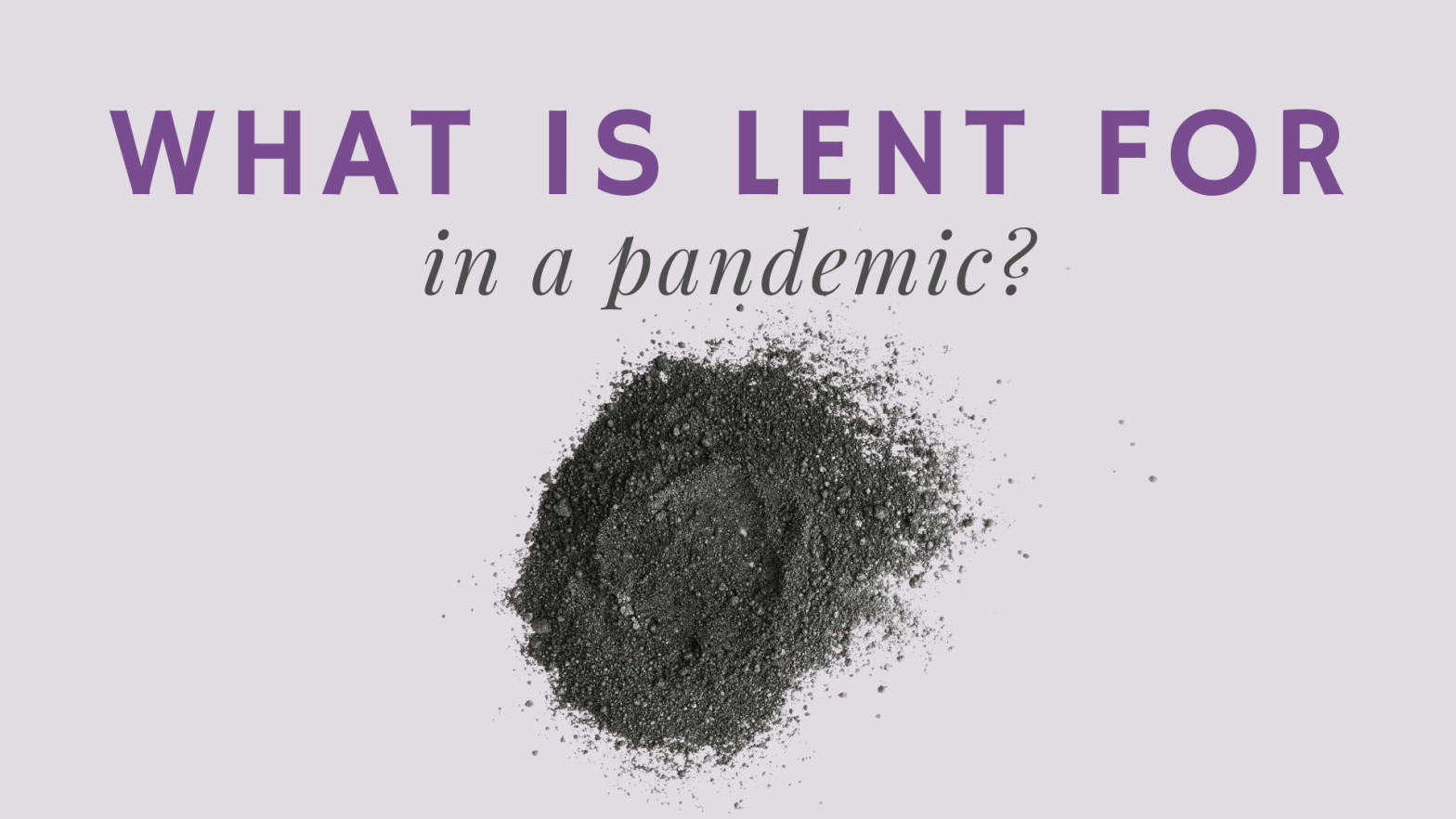
Typically, when we enter into the season of Lent, we are confronted with our mortality with the imposition of ashes and the stark reminder that we are but dust and to dust we will return. Throughout the penitent season, we remind ourselves of our dependence on God by fasting, by giving up things, and by devoting ourselves to prayer and worship. In the midst of this season of devotion, we are reminded of our frailty, of our limitations, and of our need for God’s saving help.
I don’t know about you, but I feel like maybe I need that reminder a little less this year.
For perhaps the first time in my lifetime, we’ve spent the past year confronting and facing our collective mortality and frailty as a species on a daily basis, we’ve faced how limited our capacity is to put others’ safety and health first, we’ve been giving things up—dear and treasured things like time with family—with no clear end in sight.
So what is Lent for in a year in which we have been doing Lenten-like things for so long?
Perhaps it’s a reminder that what we are experiencing has a place in the holy story and in the holy story of our lives. Rather than a pause or an aberration from normal life, the losing of things and experiencing our mortality, weakness, and limits are integral parts of the spiritual life, so much so that the ancient Christian calendar devotes a significant portion of the year to it exclusively.
And, perhaps, it’s a reminder of where this type of loss leads, time and time again. It leads, of course, to resurrection. As we will be reminded on the second Sunday of Lent, Jesus tells us that in order to save our lives we must first lose them, a paradoxical but true maxim reflected in one of my favorite poems, “Kindness” by Naomi Shihab Nye:
Before you know what kindness really is
you must lose things,
feel the future dissolve in a moment
like salt in a weakened broth.
What you held in your hand,
what you counted and carefully saved,
all this must go so you know
how desolate the landscape can be
between the regions of kindness.
…
Before you know kindness as the deepest thing inside,
you must know sorrow as the other deepest thing.
You must wake up with sorrow.
You must speak to it till your voice
catches the thread of all sorrows
and you see the size of the cloth.
Then it is only kindness that makes sense anymore,
only kindness that ties your shoes
and sends you out into the day to gaze at bread …
Without a doubt, the pandemic has been brutal. We’ve all lost something in it, often not by choice as we would typically during a Lenten fast. We’ve lost loved ones. We’ve lost school years, vacations, jobs. We’ve lost a year of life in some ways. But maybe it has the chance to make us kinder if we don’t try to lean away from those losses but rather lean into them fully.
A recent survey suggests that indeed, in the midst of the loss and death of the pandemic, there has been a small resurrection of kindness. The results suggest people have been friendly to each other even strangers, more intentional about reaching out to neighbors or loved ones, more frequently donating to food pantries, or just surprising friends with gifts. I hope, too, it also means we’ve become kinder to ourselves, more forgiving of our limitations and shortcomings.
Maybe it’s too small a sample size to draw hard-and-fast conclusions. And yet.
And yet it still rings true to the words of Jesus and poets, and whenever those two things bump into each other, I tend to pay attention. Perhaps that’s the point of Lent, and always has been, this business of giving up things and losing things for a season. Normally, we live in a world these days in which we can blunt our losses with gains in other areas or numb them with bingeing Netflix shows or other even less healthy practices, so we have to force ourselves to lose things so that we can touch the kindness in our souls again, so we can glimpse the resurrection again.
But this year, we’ve been losing things all year. Hopefully, we’ve lost but also found that after all that loss, the only thing that makes sense anymore is kindness, and that it is only kindness that sends us into the world.
Maybe, this year, Lent is more of a comfort than a challenge, a comfort to know that our faith in its wisdom and our God in their generosity and grace make space for our frailty, our shortcomings, and our mortality to become sacred, holy, and a path to draw near to God and to each other.
—The Rev. David Henson
 The Rev. David Henson