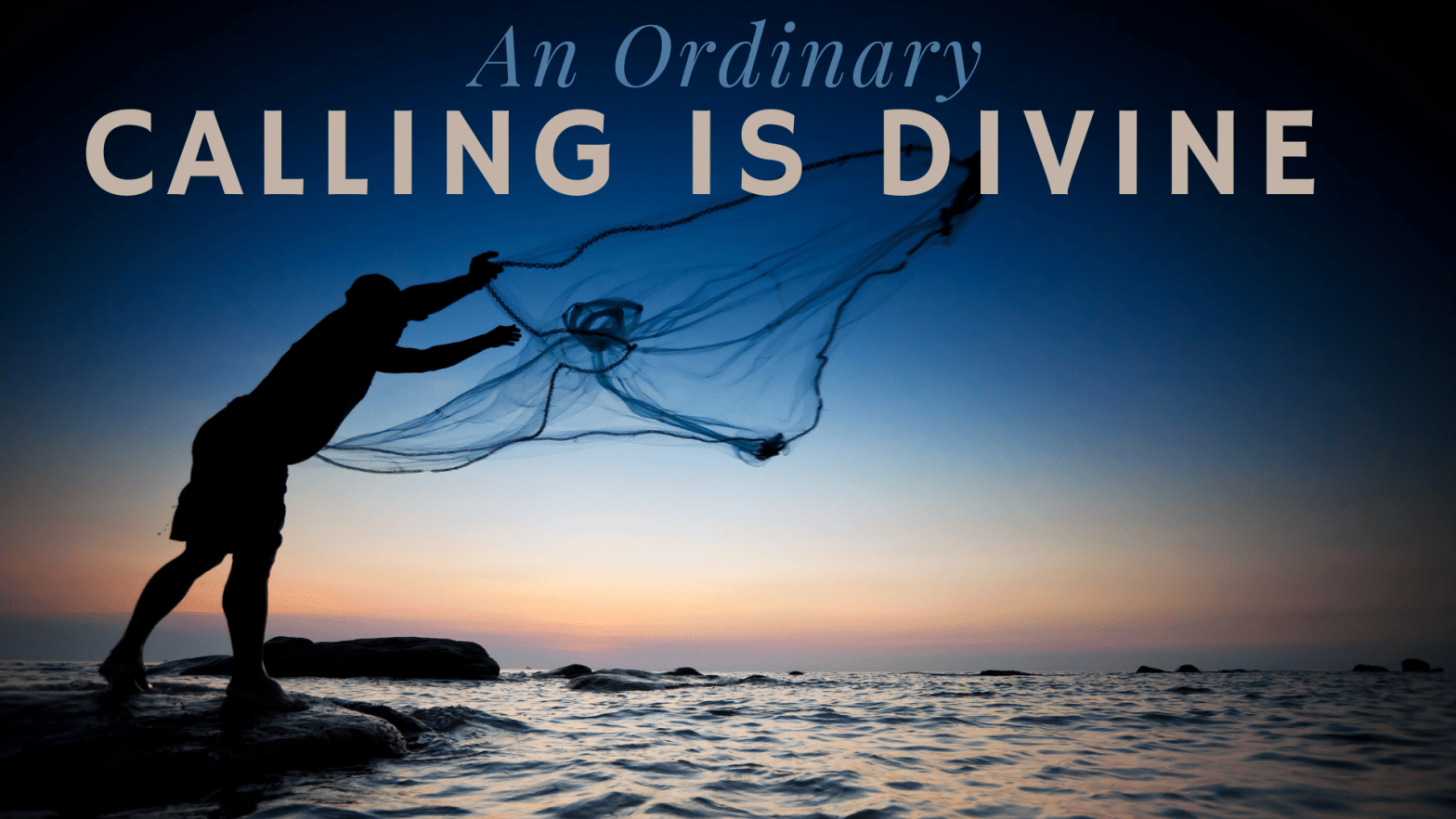
What happens to old man Zebedee after everyone leaves? There he is, holding the dropped and half-mended nets as his sons and their friends leave without so much a second thought. When he finally returns home, he’ll find that his wife, too, has left with his sons, to whirl about them and attempt to curry favor and elevated positions for them in the kingdom of Jesus. But he won’t discover this latest loss until late because now he is working long past nightfall to untangle and mend the abandoned broken nets all on his own, to continue the everyday duties so others can try to change the world and themselves.
Who have you—who have I—left to mend the nets we broke in the course of living and working so that we might follow a call we believe to be more important or more righteous than the ordinary and mundane? Who has picked up and kept mending the nets we have dropped in service of our callings?
Zebedee, I assume, keeps fishing. He rebuilds. He hires new workers or brings on distant cousins or least favorite uncles. And sure, maybe he didn’t see the miracles, the exorcisms, and the storms stilled. But maybe he saw sunsets transform the huge something he saw daily—the Sea of Galilee—into the extraordinary. and transcendent. Maybe he saw his grandchildren laugh, or take their first steps, saw friends die and stay in the grave. Maybe he wept, grieving that God had taken his sons. Maybe rejoiced that God did. Or a bit of both, pride and wistfulness meeting as it only can in a parent. At weddings, I bet he danced, and ate, and drank, probably too much and too late in the night, not willing to let go of this moment when two strands of life are woven together and knowing they will break, and praying they, too, will stay late, to mend each other when they do.
It makes me wonder who came closer to understanding the holy, the divine, the kingdom of God. The disciples who always wanted Jesus to grasp power, wrangled for favor themselves, and who never quite understood what Jesus taught? Or old man Zebedee who stayed behind and found God in the sea, the breeze, in everyday mending broken nets?
Who, in the end, understood best what it meant for the human to touch the divine and for God to touch the earth?
 The Rev. David Henson